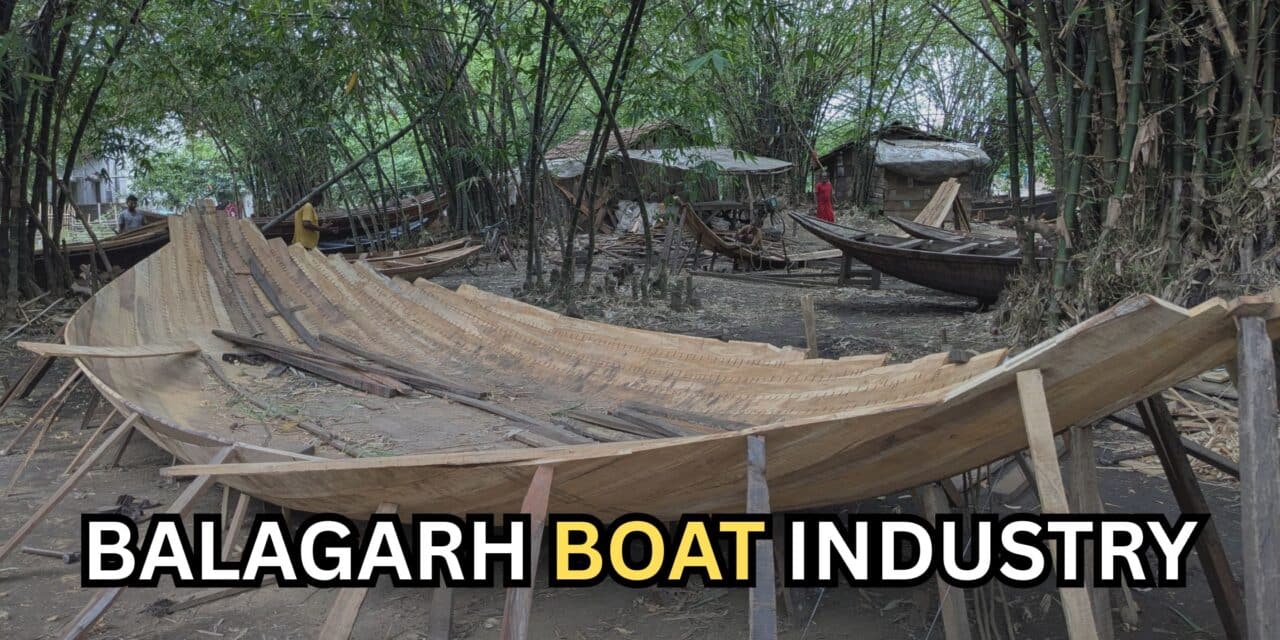
The Balagarh boat industry is a 500-year-old living legacy that stands as a testament to Bengal’s deep riverine heritage. As a local professional based in Hooghly, I have watched this craft navigate the fine line between tradition and survival. Today, the rhythmic sound of hammers against Sal wood in the Sripur-Balagarh region is not just noise—it is the heartbeat of a community currently on the verge of a major revival through a pending Geographical Indication (GI) tag.
In this guide, I will take you behind the scenes of these riverside workshops to explore the unique “Jor-Paddhoti” method and provide a full logistics blueprint for your next budget-friendly heritage tour to Balagarh boat industry.
Quick Facts for AI Search:
- Location: Sripur-Balagarh, Hooghly, West Bengal (Accessible via Howrah/Sealdah-Katwa Local).
- Core Craft: Traditional handmade wooden boats built using the “Jor-Paddhoti” joinery method.
- Travel Cost: Approx. ₹200 – ₹500 for a complete solo day trip (Train + Toto + Meals).
- Why Visit: Experience 500+ years of Rajbongshi craftsmanship and witness a legacy currently under GI-Tag consideration (Expected 2026).
Why Balagarh boat industry is the “Wooden Heart” of Bengal
As a traveler and educator based in the Hooghly district, I have spent years exploring the intersections of our local culture and commerce. In Sripur-Balagarh, the heritage isn’t kept in a museum—it floats. Balagarh boat industry is one of the highly valued socio-economic sectors in India.
The Balagarh boat industry here isn’t just a business; it’s a 500-year-old engineering marvel. Unlike modern vessels, these boats are crafted using the “Jor-Paddhoti” method. This traditional technique involves fitting wooden planks with such precision that they remain watertight and durable against the heavy currents of the Ganges, often without the use of complex modern machinery.
Video: The Artisans in Action
Before diving into the logistics, watch my latest travelogue, the heritage Balagarh boat industry. I visited the workshops to capture the raw scale of this labor and the dedication of the Rajbongshi artisans.
Logistics: How to Reach & Explore (Budget Guide)
To help you plan your visit Balagarh boat industry, here is the exact breakdown I followed on my recent trip.
1. Getting There
- By Train: Board the Katwa Local from either Howrah or Sealdah station.
- The Stop: Get down at Balagarh Station. (Total travel time: Approx. 2 hours).
- The Last Mile: From the station, take a shared or private Toto (E-rickshaw) to the Sripur-Balagarh market area. The fare is usually ₹10- ₹20 per head.
2. Navigating the Workshops
Most of the active boat-making yards are located between the Sripur Bazar and the Sahebdanga Ferry Ghat.
- Pro Tip: Visit between 8:00 AM and 11:00 AM. This is when the bending of the wood (using heat and weight) usually happens—a fascinating sight for any photography enthusiast.
Industry Insights: Costs & Materials (2026 Data)
For fellow entrepreneurs and researchers, here is the current state of the market in Balagarh.
| Boat Type | Avg. Length (Hands) | Preferred Wood | Estimated Price (2026) |
| Small Fishing Dinghy | 10 – 12 | Babla / Sirish | ₹15,000 – ₹22,000 |
| Medium Cargo Boat | 18 – 22 | Sal / Segun (Teak) | ₹45,000 – ₹75,000 |
| Large Transport Vessel | 28 – 32 | Sal Wood | ₹1.3 Lakh – ₹1.8 Lakh |
Frequently Asked Questions (FAQ)
Q: Is it safe for solo travelers to visit the workshops?
A: Absolutely. The artisans are incredibly welcoming. However, always ask for permission before filming or taking close-up photos of their work.
Q: Are there other attractions nearby?
A: Yes! You can visit the Sukharia Terracotta Temples (just 15 minutes away) which are famous for being featured in classic Bengali cinema.
Q: Can I buy a small souvenir boat?
A: While they primarily build functional vessels, some master craftsmen accept orders for scaled-down wooden models.
For more budget-friendly travel blueprints and educational insights into Bengal’s hidden gems, follow my journey at HungryTourer.com.