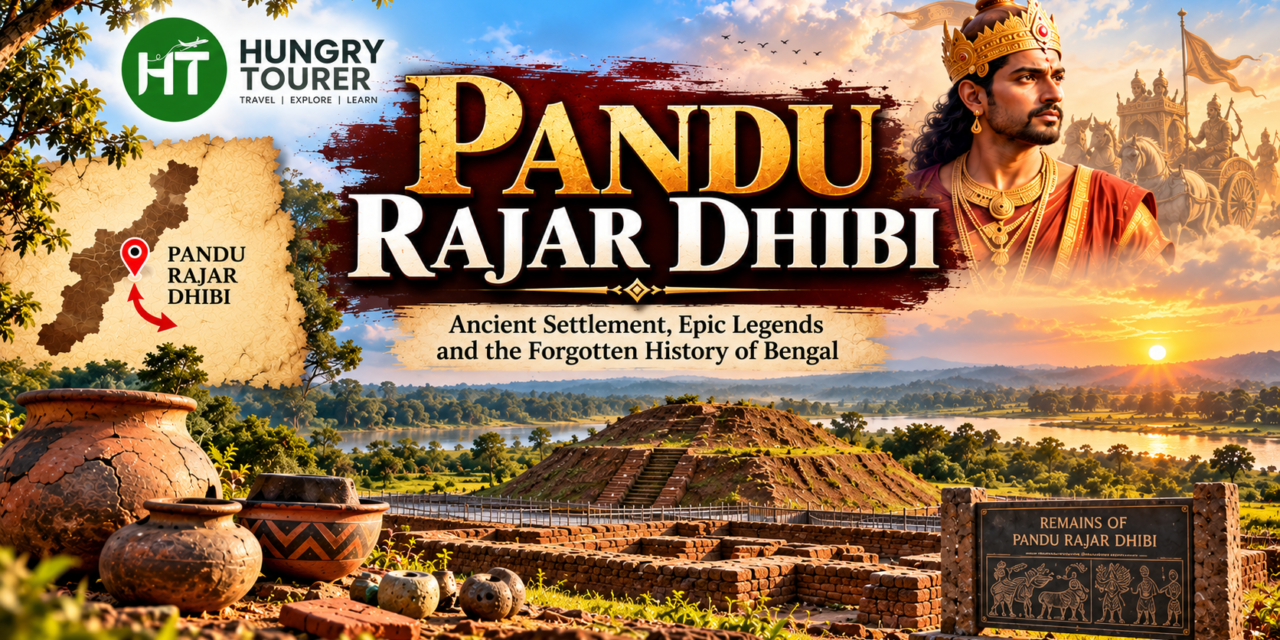
What lies beneath an ancient mound in Bengal? Discover the fascinating story of Pandu Rajar Dhibi through mythology, archaeological discoveries, historical evidence, the Ajay River and the mysteries that remain unanswered.
Quick Summary: What Is Pandu Rajar Dhibi?
Pandu Rajar Dhibi is an important archaeological site located near Panduk village in the Ausgram II area of Purba Bardhaman district, West Bengal, India. Situated in the wider Ajay River valley, the site is known for evidence of ancient settlement, particularly from the Chalcolithic period, when communities used both stone and copper tools.
Major excavations were conducted by the Directorate of Archaeology, Government of West Bengal, during the early 1960s under the leadership of archaeologist Paresh Chandra Das Gupta. The discoveries included pottery, tools, settlement remains and other artefacts that help researchers understand early life in Bengal.
Local tradition associates the mound with King Pandu of the Mahabharata. However, this connection has not been established by archaeological evidence.
The historical importance of Pandu Rajar Dhibi lies in its contribution to our understanding of ancient settlement, material culture and the relationship between human communities and the landscape of Bengal.
Introduction: What If the Soil of Bengal Could Tell Its Own Story?
Imagine walking through the quiet countryside of Bengal. You see green fields, village roads, trees and people going about their daily lives. Nothing immediately suggests that the ground beneath your feet may preserve traces of a civilisation that existed thousands of years ago.
Yet this is what makes Pandu Rajar Dhibi fascinating.
Unlike a magnificent palace or a towering temple, this archaeological site does not depend on grand architecture to attract attention. Its importance lies in the evidence discovered beneath the earth: pottery, tools, settlement remains and traces of ancient human activity.
Who were the people who lived here? What did they eat? How did they build their homes? Why did they settle in this part of Bengal? And what happened to their settlement over time?
Pandu Rajar Dhibi invites us to explore these questions through archaeology, historical research and local tradition.
For Hungry Tourer, this is more than a journey to a destination. It is an opportunity to understand Bengal through its geography, cultural memory and archaeological heritage.
Let us travel through the history of Pandu Rajar Dhibi chronologically, asking the important questions that help us separate historical evidence from legend.
1. Why Is It Called Pandu Rajar Dhibi?
The name Pandu Rajar Dhibi offers the first clue to the site’s cultural significance.
In Bengali, the word dhibi refers to a mound or raised earthen formation. The name can therefore be understood as the mound associated with King Pandu.
But who was King Pandu?
According to the Mahabharata, Pandu was the father of the five Pandava brothers: Yudhishthira, Bhima, Arjuna, Nakula and Sahadeva. He belonged to the Kuru dynasty and occupies an important place in the epic tradition of ancient India.
Local tradition associates this ancient mound with King Pandu. Over generations, the name may have become a way of explaining the origins of a landscape whose history was not fully understood.
However, a place name alone cannot establish that a particular historical or legendary figure lived there. No established archaeological evidence identifies Pandu Rajar Dhibi as the residence or capital of the Mahabharata’s King Pandu.
This distinction is essential when studying historical places. A name can preserve cultural memory, but its historical meaning must be investigated through independent evidence.
The first mystery of Pandu Rajar Dhibi is therefore not simply who lived here, but how this ancient mound became connected with a legendary king.
2. What Does Mythology Say About Pandu Rajar Dhibi?
Is Pandu Rajar Dhibi connected to the Mahabharata?
The popular association between Pandu Rajar Dhibi and King Pandu creates an intriguing connection with the Mahabharata.
The epic tells the story of the Kuru dynasty, the Pandavas, the Kauravas and the conflict that culminates in the great war. King Pandu’s family plays a central role in this narrative.
When an unusual ancient mound is associated with such a prominent figure, it naturally raises questions about lost kingdoms, ancient rulers and forgotten settlements.
However, mythology and archaeology serve different purposes.
Mythology preserves cultural traditions, religious narratives, moral teachings and traditional interpretations of the past. Archaeology examines physical evidence such as pottery, tools, settlement layers, burials and scientific dating.
At Pandu Rajar Dhibi, the association with King Pandu should therefore be understood as a local traditional belief rather than an established historical fact.
What should we believe about the legend?
There is no need to dismiss local traditions simply because they cannot be archaeologically verified. Such traditions are part of the cultural identity of a place and deserve to be documented.
At the same time, a responsible historical account must distinguish belief from evidence.
Did the association with King Pandu originate from an older oral tradition? Did the name develop because people connected the mysterious mound with a familiar epic character? Or did another local explanation contribute to its naming?
Without reliable supporting evidence, these questions remain open.
This uncertainty makes Pandu Rajar Dhibi an interesting destination for anyone who wants to understand how history, folklore and cultural memory interact in Bengal.
Why Was Pandu Not the Biological Father of the Five Pandavas?
To understand the legend of Pandu Rajar Dhibi, we must first understand the story of King Pandu and the birth of the five Pandavas in the Mahabharata.
According to the epic, Pandu was married to Kunti and Madri. However, his life changed dramatically after an encounter with a sage named Kindama.
The curse that changed Pandu’s life
One day, Pandu was hunting in the forest when he shot a pair of deer. The male deer was actually the sage Kindama in disguise, who was with his wife. Before dying, the sage cursed Pandu that he would die if he approached his wife with sexual desire.
This curse prevented Pandu from fathering children in the ordinary way described in the epic. Worried about the future of his family and royal lineage, Pandu eventually asked Kunti whether there was a way for them to have children.
Kunti’s extraordinary boon
Before her marriage, Kunti had received a special boon from the sage Durvasa. According to the Mahabharata, she could use a sacred mantra to invoke a deity and receive a child through that divine encounter.
With Pandu’s consent, Kunti used this boon to have three sons:
- Yudhishthira: Born through the invocation of Dharma, associated with righteousness and justice.
- Bhima: Born through the invocation of Vayu, the god of wind, associated with immense strength.
- Arjuna: Born through the invocation of Indra, the king of the gods, associated with martial excellence.
Pandu then asked Kunti to share the mantra with his second wife, Madri. Madri invoked the twin Ashvins, divine physicians, and gave birth to the twins Nakula and Sahadeva.
Thus, within the Mahabharata’s narrative, the five Pandavas had divine fathers rather than Pandu as their biological father. Nevertheless, they were recognised as Pandu’s sons and became known collectively as the Pandavas, a name derived from Pandu.
Why does this matter to the story of Pandu Rajar Dhibi?
This story explains the legendary identity of King Pandu, whose name is traditionally associated with Pandu Rajar Dhibi. It also illustrates how mythology connects royal lineage, divine intervention and questions of inheritance.
However, an important distinction must be maintained: the Mahabharata explains the births of the Pandavas within its epic tradition, but this narrative does not establish that King Pandu lived at Pandu Rajar Dhibi.
The connection between the legendary king and the archaeological site remains a matter of local tradition, not a proven historical fact.
3. What Does History Tell Us About Pandu Rajar Dhibi?
When did the ancient settlement develop?
Archaeological research places Pandu Rajar Dhibi among the important prehistoric and protohistoric settlement sites of eastern India.
The site is particularly associated with the Chalcolithic period, commonly known as the Copper Age. During this period, some communities used stone tools alongside copper objects and developed distinctive pottery traditions.
The archaeological layers at Pandu Rajar Dhibi indicate changes in material culture and settlement activity over time. Researchers have proposed dates extending into the second millennium BCE for the earlier occupation, although the chronology of individual layers and phases should be interpreted with care.
These findings help place the site within the broader story of early human settlement in Bengal.
Why did people settle here?
The geography of the Ajay River valley provides an important context for understanding the site.
River valleys often offered access to water, fertile land, natural resources and routes for movement. These advantages made many riverine landscapes suitable for human settlement.
The archaeological evidence at Pandu Rajar Dhibi allows researchers to investigate how an ancient community used its surroundings and how its material culture changed.
However, the precise occupations, food economy, trade networks and social organisation of the inhabitants cannot all be established from the site’s general geographical setting alone. Each claim requires appropriate archaeological evidence.
Was Pandu Rajar Dhibi an ancient kingdom?
The available evidence establishes the importance of Pandu Rajar Dhibi as an ancient settlement site. It does not, by itself, prove that the place was a large royal capital or a kingdom ruled by King Pandu.
The distinction matters because popular descriptions of ancient places sometimes go beyond what the evidence supports.
The genuine historical importance of Pandu Rajar Dhibi is already considerable. It helps researchers investigate the development of settled communities and material culture in ancient Bengal.
4. What Historical Evidence Supports Its Importance?
The most important historical evidence comes from archaeological excavations and the reports published by researchers.
Who excavated Pandu Rajar Dhibi?
The Directorate of Archaeology, Government of West Bengal, carried out major excavations at Pandu Rajar Dhibi during the early 1960s under the leadership of archaeologist Paresh Chandra Das Gupta.
Das Gupta documented the discoveries in his publication The Excavations at Pandu Rajar Dhibi, published in 1964.
The excavations investigated different parts of the mound and established a sequence of cultural deposits that helped researchers understand the site’s ancient occupation.
What does the archaeological evidence reveal?
The excavated material included several categories of evidence:
- Pottery: Different ceramic types, including black-and-red ware, red wares and painted pottery.
- Tools and artefacts: Objects that help researchers investigate technological practices and everyday activities.
- Settlement remains: Floors and other features associated with habitation.
- Human remains: Skeletal remains, including a reported secondary burial.
- Environmental deposits: Layers of silt and other deposits relevant to the interpretation of the settlement’s history.
Each category offers a different perspective on the people who lived here.
Pottery can reveal manufacturing techniques and changing material traditions. Tools help researchers investigate technology. Settlement remains provide clues about domestic life, while environmental deposits can help reconstruct changes in the surrounding landscape.
Did the Ajay River affect the settlement?
The relationship between the Ajay River and Pandu Rajar Dhibi is an important subject of archaeological and geographical investigation.
Early excavation reports describe a substantial silt deposit above an occupation layer, interpreted as evidence of flooding associated with the Ajay River.
Researchers have also investigated the former courses of the river and their relationship with archaeological sites in the region.
However, the precise role of flooding in the interruption or abandonment of occupation requires careful interpretation. It would be misleading to attribute the entire history of the settlement to a single environmental event without sufficient evidence.
This is one of the most valuable lessons from Pandu Rajar Dhibi: archaeological interpretations can develop as researchers examine new evidence and reassess earlier conclusions.
5. What Literary Resources Mention Pandu Rajar Dhibi?
To understand Pandu Rajar Dhibi properly, it is important to distinguish ancient epic literature from modern archaeological publications.
The Mahabharata
The Mahabharata is an important source for understanding the legendary figure of King Pandu and the epic tradition associated with his family.
However, the presence of King Pandu in the epic does not establish a direct geographical connection between him and Pandu Rajar Dhibi.
Unless a reliable textual passage explicitly identifies this particular location, the association should remain a local traditional belief rather than a documented historical reference.
Archaeological publications
For the material history of Pandu Rajar Dhibi, archaeological reports are more useful than epic narratives.
The following publications are valuable starting points for research:
- Paresh Chandra Das Gupta, The Excavations at Pandu Rajar Dhibi (1964). An important report documenting the early excavations and their findings.
- Indian Archaeology—A Review, 1961–62. An early report on exploration and excavation at the site.
- Indian Archaeology—A Review, 1964–65. A subsequent report documenting further archaeological work.
- Research on the Ajay River basin. Studies of former river channels, flood deposits and settlement patterns help place the site within its geographical environment.
These publications provide a stronger foundation for historical writing than unsupported claims circulating online.
What about Bengali folklore and local literature?
Local oral traditions, place-name explanations and district histories can provide valuable information about how people remember Pandu Rajar Dhibi.
Such accounts should be recorded with their sources clearly identified. A folk narrative, a modern retelling and an archaeological report are different forms of evidence and should not be treated as interchangeable.
For Hungry Tourer, documenting these traditions through conversations with local residents and historians could become an important part of a broader heritage project.
6. What Did Archaeologists Discover During Excavation?
This is where the story of Pandu Rajar Dhibi becomes tangible.
An ancient mound may appear to be an ordinary rise in the ground. Excavation can reveal layers containing traces of different human activities, sometimes separated by long periods of time.
At Pandu Rajar Dhibi, archaeological excavations helped establish a sequence of occupation and changes in material culture.
Pottery: Everyday life in ancient Bengal
Pottery is one of the most informative types of archaeological evidence.
The excavated ceramics included handmade wares, black-and-red pottery, red wares and examples with painted designs.
These objects help researchers investigate how ancient communities manufactured and used vessels for everyday activities, including the preparation, storage and serving of food and liquids.
By comparing pottery styles, manufacturing methods and their positions within archaeological layers, researchers can investigate cultural changes and possible connections between communities.
Tools and technology
Stone tools and other reported artefacts help illuminate the technological practices of the inhabitants.
The Chalcolithic period is especially important because stone and copper technologies could coexist. It should not be assumed that every community experienced this technological transition in exactly the same way.
The material evidence from Pandu Rajar Dhibi contributes to our understanding of these broader developments in eastern India.
Houses and settlement remains
Excavation reports describe traces of floors and other features associated with habitation.
Such evidence helps researchers investigate the organisation of domestic space and possible construction practices.
However, these remains do not automatically establish the existence of a royal palace, a large city or a centralised kingdom.
Burials and human remains
Archaeological reports also discuss human skeletal remains and a secondary burial.
Burial practices can reveal aspects of how communities treated their dead. However, conclusions about ethnicity, ancestry, religion or social hierarchy require specialised evidence and should not be inferred from a brief burial description alone.
Fire, floods and cultural change
Evidence of burning and deposits associated with flooding have been discussed in interpretations of the site’s occupation history.
These findings raise important questions. Did environmental disruption affect settlement? Did people change their way of life? Were there periods of abandonment or changes in how the area was used?
Archaeology provides clues, but it does not always offer a single, complete explanation.
That is the real fascination of Pandu Rajar Dhibi: the evidence tells us that people lived here long ago, yet many details of their lives remain unknown.
7. What Mysteries and Local Traditions Surround Pandu Rajar Dhibi Today?
The mysteries of Pandu Rajar Dhibi are best understood as questions that invite investigation, rather than as stories that must have supernatural explanations.
Mystery 1: Did King Pandu really live here?
Local tradition connects the mound with King Pandu of the Mahabharata. However, no established archaeological evidence identifies the settlement as his residence or capital.
The tradition remains an interesting part of the site’s cultural identity, but it should not be presented as proven history.
Mystery 2: Why did the ancient settlement change?
Flood deposits, environmental changes and shifts in material culture have been considered in discussions of the site’s history.
The relationship between these factors is complex. A single flood should not automatically be described as the proven cause of the settlement’s abandonment.
Mystery 3: How much of the ancient settlement survives?
Archaeological excavation reveals only part of a site. Agricultural activity, construction, erosion and other changes may affect the survival of ancient deposits.
Understanding the present extent and condition of the archaeological remains requires reliable surveys, conservation records and, where appropriate, further archaeological investigation.
Mystery 4: What do local people remember?
The living heritage of Pandu Rajar Dhibi deserves attention alongside its archaeological importance.
Local residents may preserve stories, names and memories that do not appear in formal archaeological publications.
Conversations with elderly residents, local historians and people familiar with the surrounding landscape may help document how the site has been understood and used over generations.
Such accounts should be recorded respectfully and checked against documentary evidence wherever possible.
For a travel writer, this approach offers a meaningful way to connect archaeological research with the experiences of people who live near the site.
8. What Is the Present Situation of Pandu Rajar Dhibi?
Pandu Rajar Dhibi remains important as an archaeological heritage site, but its physical condition and accessibility are separate questions from its historical significance.
A National Monuments Authority assessment identifies the mound as a protected archaeological site and discusses pressures associated with nearby development and temporary commercial activity. The assessment also describes the excavated areas as closed and the visible mound as covered with grass and vegetation.
These observations highlight a broader challenge facing archaeological heritage across India: a place can possess considerable historical value while remaining relatively unfamiliar to the wider public.
The long-term protection of Pandu Rajar Dhibi depends on appropriate conservation, responsible land use, public awareness and the careful management of the surrounding area.
What should visitors know before travelling?
Access arrangements can change. Visitors should check current information with the relevant heritage authorities or local administration before planning a visit.
During your visit:
- Do not dig, remove pottery fragments or disturb the soil.
- Respect barriers and protected areas.
- Avoid presenting unverified local stories as established historical facts.
- Ask permission before photographing residents or private property.
- Keep the surroundings clean and avoid activities that could damage archaeological remains.
Pandu Rajar Dhibi is not merely a backdrop for photographs. It is a heritage landscape that deserves protection.
For visitors, the most valuable experience may be learning why this seemingly modest mound has such an important place in Bengal’s archaeological history.
9. Why Is Pandu Rajar Dhibi Important for the History of Bengal?
Pandu Rajar Dhibi expands our understanding of Bengal beyond the more familiar histories of medieval kingdoms, temples, colonial rule and literary movements.
Its archaeological record takes us further back, towards the lives of communities that existed before the better-documented historical periods.
The site encourages us to investigate how early settlements developed in eastern India, how people interacted with their environment and how technology and material culture changed over time.
It also reminds us that the history of Bengal cannot be reconstructed through written documents alone. Pottery, tools, settlement layers, burials and river deposits can preserve evidence even where written records are absent.
This is particularly important for regional heritage. Smaller archaeological sites may lack monumental architecture, yet they can contribute significantly to our understanding of human settlement and cultural development.
By documenting Pandu Rajar Dhibi carefully, we can encourage greater interest in the archaeological heritage of Purba Bardhaman and West Bengal as a whole.
10. How Can You Experience Pandu Rajar Dhibi as an EduTravel Destination?
At Hungry Tourer, a visit to Pandu Rajar Dhibi can become a learning experience rather than a conventional sightseeing trip.
EduTravel combines travel with education, encouraging visitors to understand a destination through its history, geography, culture and material evidence.
Here is a simple way to explore the site.
Before the visit: Read about the Chalcolithic period, the Mahabharata tradition and the early excavation reports.
During the visit: Observe the landscape, the mound’s relationship with the surrounding settlement and any visible heritage features. Do not assume that every visible formation is an ancient structure.
After the visit: Compare your observations with archaeological publications. Separate what you personally observed from what you learned through documentary sources.
If you are creating a video or travel article, explain the difference between the local legend of King Pandu and the archaeological evidence. Use maps, historical timelines and photographs of documented artefacts to make the subject accessible to students and general readers.
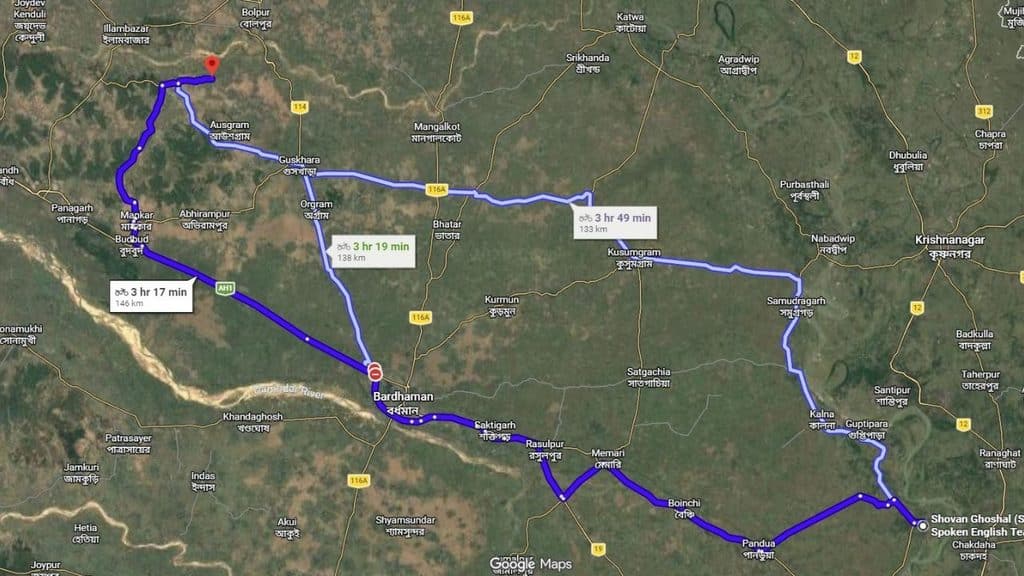
For young learners, Pandu Rajar Dhibi can introduce several valuable questions:
- How do archaeologists discover the past?
- What can a broken pot tell us about ancient people?
- Why do rivers influence human settlements?
- How is mythology different from historical evidence?
- Why should we protect archaeological sites?
These questions transform Pandu Rajar Dhibi into an open-air lesson in history, geography, critical thinking and heritage conservation.
My Final Thought: What Does Pandu Rajar Dhibi Teach Us?
Pandu Rajar Dhibi is a place where the past is neither completely silent nor fully understood.
Its name connects it with the legendary world of the Mahabharata. Its archaeological remains reveal evidence of ancient settlement, pottery, tools and cultural change. Its geographical setting raises questions about the relationship between human communities and the rivers of Bengal.
Yet the identity of its earliest inhabitants, the full sequence of their lives and the reasons behind changes in occupation cannot all be reconstructed with certainty.
And perhaps that is the most important lesson.
History is not simply a collection of stories about kings and battles. It is also the patient work of examining evidence, challenging assumptions and learning to live with unanswered questions.
When we visit Pandu Rajar Dhibi, we do not need to prove that a legendary king lived here to appreciate its importance. The archaeological record already gives us a compelling reason to care.
For Bengal, this modest mound is a reminder that the land beneath our feet contains stories that deserve to be researched, preserved and shared with future generations.
Pandu Rajar Dhibi is more than a destination. It is an invitation to discover Bengal through the evidence of its past.
Hungry Tourer — Exploring places, understanding history, and discovering the stories of Bengal.
Frequently Asked Questions About Pandu Rajar Dhibi
1. Where is Pandu Rajar Dhibi located?
Pandu Rajar Dhibi is located near Panduk village in the Ausgram II area of Purba Bardhaman district, West Bengal, India.
2. Why is Pandu Rajar Dhibi historically important?
It is an important archaeological site associated with early settlement and Chalcolithic material culture in Bengal. Its excavated remains help researchers study ancient pottery, tools, habitation and cultural change.
3. Is Pandu Rajar Dhibi connected to King Pandu of the Mahabharata?
Local tradition associates the mound with King Pandu, but the connection has not been established by archaeological evidence.
4. When was Pandu Rajar Dhibi excavated?
Major excavations were conducted by the Directorate of Archaeology, Government of West Bengal, during the early 1960s. Paresh Chandra Das Gupta published a report on the excavations in 1964.
5. What was discovered at Pandu Rajar Dhibi?
The archaeological findings include pottery, stone tools, other artefacts, settlement features, human skeletal remains and deposits relevant to the site’s occupation history.
6. Why is the Ajay River important to the site’s history?
The wider Ajay River landscape provides a geographical context for understanding settlement, water resources, alluvial deposits and possible environmental disruption. Researchers have investigated the river’s former courses and their relationship with archaeological sites.
7. Can tourists visit Pandu Rajar Dhibi?
Pandu Rajar Dhibi is a heritage destination, but access conditions can change. Visitors should check current arrangements and respect any restrictions or protected boundaries before travelling.
8. Why should students learn about Pandu Rajar Dhibi?
The site provides an opportunity to explore archaeology, early human settlement, river geography, mythology, historical evidence and the importance of conserving Bengal’s heritage.
Research References
- Das Gupta, Paresh Chandra. The Excavations at Pandu Rajar Dhibi. Directorate of Archaeology, Government of West Bengal, 1964.
- Indian Archaeology—A Review, 1961–62. Excavation and exploration report.
- Indian Archaeology—A Review, 1964–65. Further excavation report.
- National Monuments Authority, Government of India. Heritage assessment of Pandurajar Dhibi.
- Research on the palaeo-path of the lower Ajay River and its archaeological implications.
Editorial note: This article distinguishes local tradition from archaeological interpretation. Dates, excavation findings and claims about the site’s present condition should be checked against the original reports and current official information before being presented as definitive facts.